Chimney fire risk removed
Creosote is the fuel a chimney fire runs on. Taking it out is the single most effective thing you can do for the safety of the house.
Free written estimate before any work begins
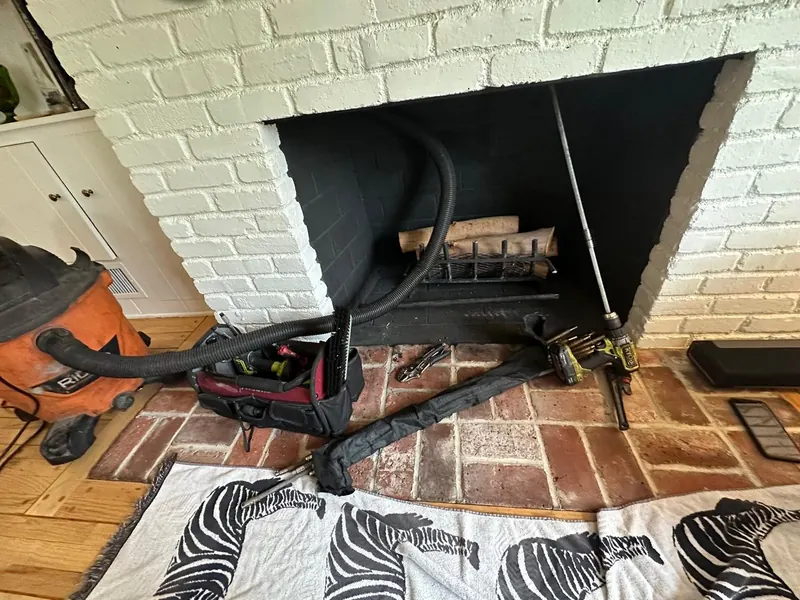
Creosote and soot removed to CSIA standard, with drop cloths down and a HEPA vacuum running the whole time.
Licensed & insured · 134 reviews
Fast response. No obligation.
Creosote is what burns in a chimney fire. It builds in layers every time you burn, faster with damp wood or a cool flue, and once it glazes it no longer brushes off. A yearly sweep keeps that build-up in the stage where it can still be removed and gives you a look at the flue while it is clean enough to see.
If you are not satisfied with the result, we come back and make it right at no charge.
Benefits
Creosote is the fuel a chimney fire runs on. Taking it out is the single most effective thing you can do for the safety of the house.
Soot narrows the flue and chokes the draft. A clear flue lights easier, burns hotter and stops pushing smoke back into the room.
The brush exposes cracked tiles, a rusted damper or a failing crown. Finding those in October costs a fraction of finding them in January.
Drop cloths, a sealed HEPA vacuum and a wipe-down. The hearth is cleaner when we leave than when we arrived.
You get photographs and a plain-language report, which matters for insurance and again when you sell the house.
Warning signs
Call (209) 447-0752 or request a quote online.
Process
Drop cloths over the hearth and floor, and the fireplace opening sealed so nothing escapes into the room.
Rotary and hand brushes from the firebox through the smoke chamber, throat and flue to the cap, sized to your flue.
A HEPA vacuum runs the whole time so the soot goes into the machine rather than onto your furniture.
Camera and visual check of the liner, damper, smoke shelf and crown now that the surfaces are clean.
We show you what we found, photograph anything that needs attention, and give you the written estimate before any repair work.
Local
Our work
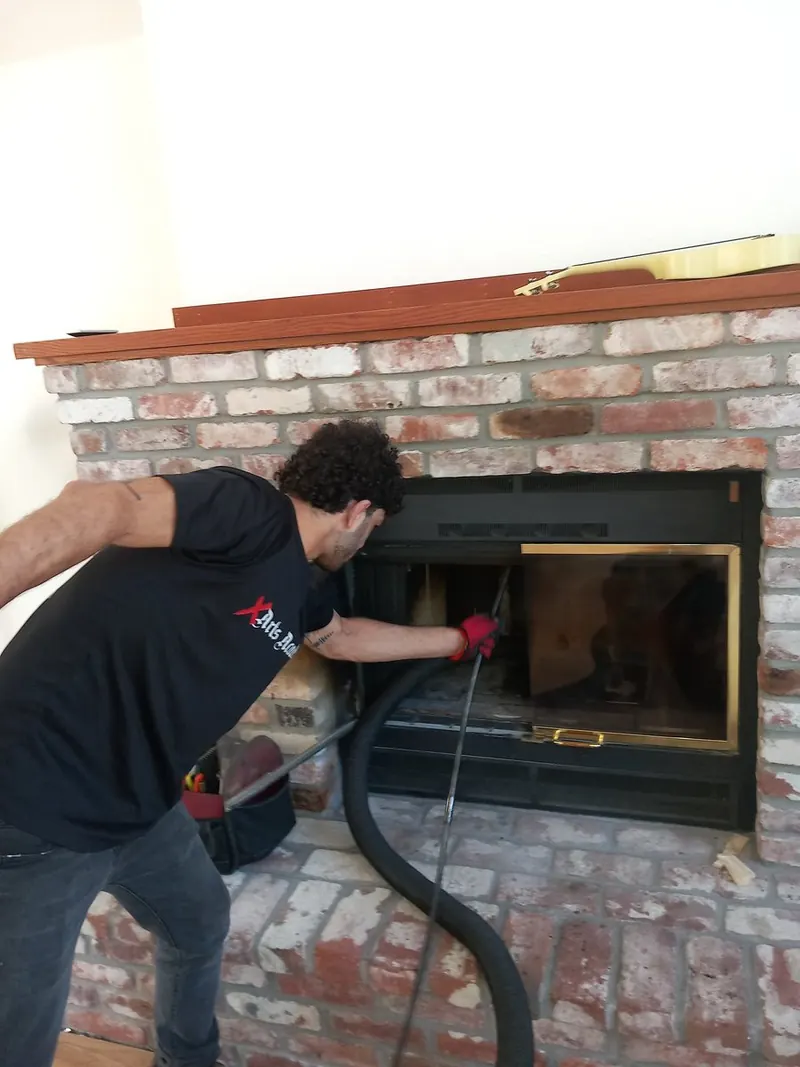
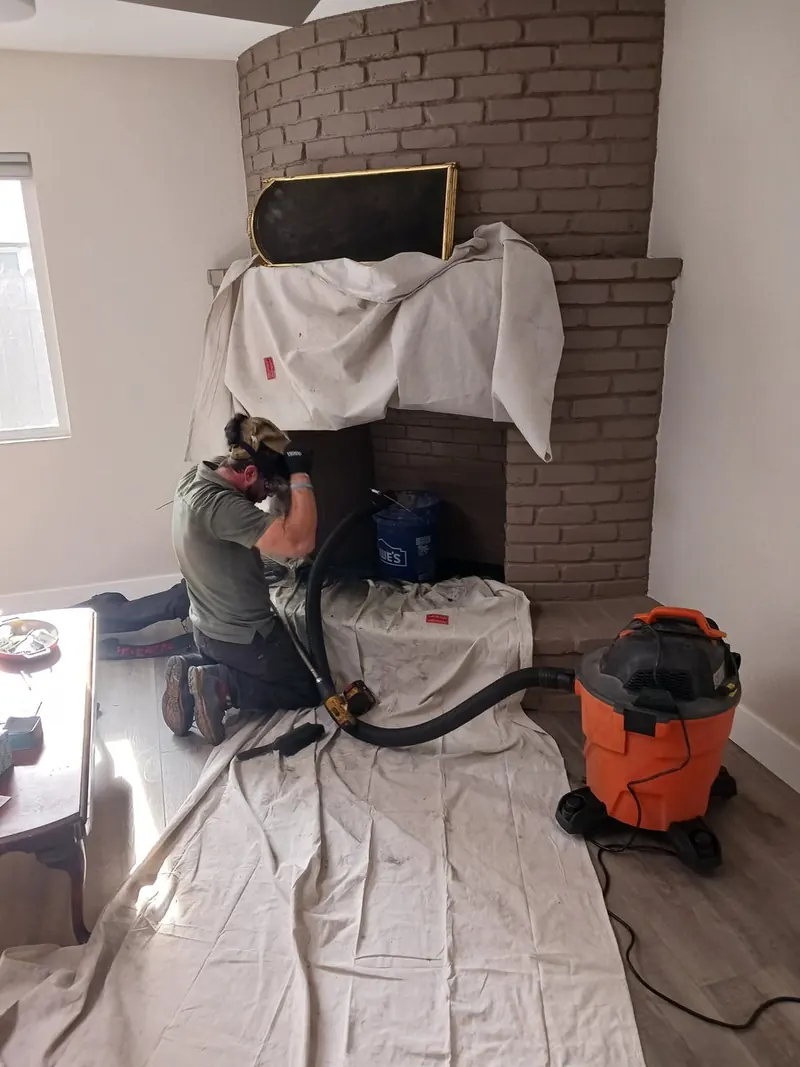
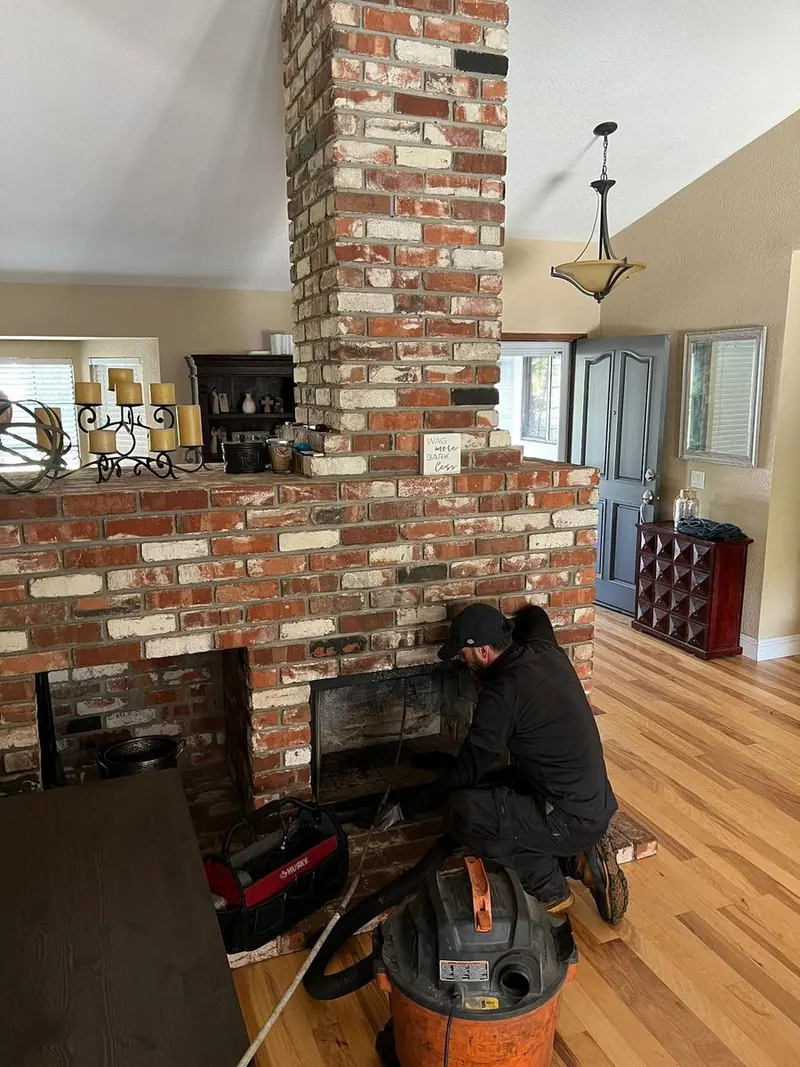
Photographs from jobs our own crews have completed.
Questions
Once a year for anything you burn regularly, and the industry standard is an annual inspection regardless of use. If you burn most evenings through the winter, or you burn wood that was not fully seasoned, it is worth doing before every heating season.
A straightforward single fireplace usually runs about an hour to ninety minutes. Heavy glazed creosote, a blocked flue or a second fireplace adds time, and we will tell you before we start rather than after.
No. The opening is sealed, the hearth is covered and a HEPA vacuum runs under negative pressure for the whole job. Soot ends up in the machine.
Let the fireplace go cold for at least 24 hours and clear a path to the hearth. We handle the rest.
You get photographs, an explanation in plain language and a written estimate. Nothing gets repaired without you agreeing to it first.
More
Level 1 and Level 2 inspections with a written report and camera footage, including inspections for a home sale.
Learn more about Chimney InspectionCrown repair, liner replacement, repointing and rebuilds, quoted in writing before any work starts.
Learn more about Chimney RepairFirebox, damper, smoke chamber and hearth cleaned and checked, with the glass and brickwork brought back.
Learn more about Fireplace CleaningAlpine Chimney Company
1080 Broadway
Millbrae, CA 94030
(209) 447-0752
info@alpinechimneycompany.com
Fast response. No obligation.